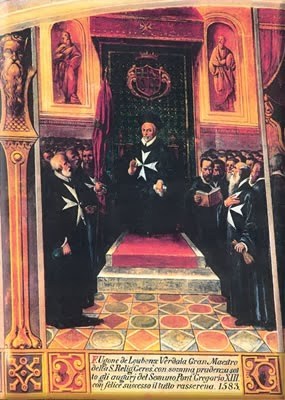
Brief Biography
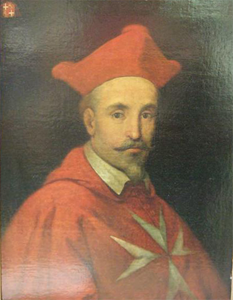
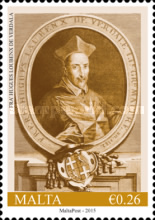
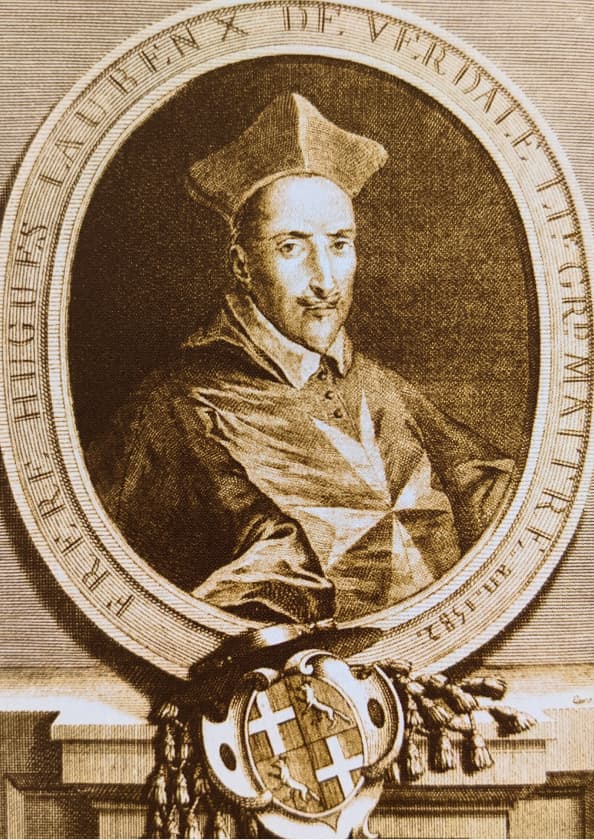
Hugues Loubenx de Verdala governed Malta from 1582 to 1595 and was made a cardinal in 1587.
Sources: Order of Malta: The Grand Masters; Wikipedia: Grand Masters of the Knights Hospitaller. Further reading.

Life and service to the Order
He rebuilt a hunting lodge into the residence now known as Verdala Palace, which bears his name.
On Malta the Order developed hospitals, fortifications and a maritime presence while governing the islands. Its religious and charitable purposes continued alongside these public responsibilities.
Grand Master Hugues Loubenx de VERDALA (1582-95) was pious but
worldly and he was shrewd enough to realize that it was hard for the young
Knights of his days to adhere strictly to the standards of rigid monastic life.
He himself found it somewhat difficult to do so.
He built the princely Verdala
Palace and surrounded it with a beautiful garden known as il-Buskett.
He
repaired and rebuilt many of Valletta's bastions and constructed two massive new
ones to protect the city from the landside.
His great merit is the edition of the Statuta Hospitalis Hierusalem in 1588 https://hdl.loc.gov/loc.wdl/wdl.9912
Hugues reformed the order and commissioned Jacopo Bosio to write his historical work on the order, Historia Equitum S. Ioannis Hierosolymitani.
Hugues Loubenx de Verdalle (1531–1595) was the 51st Grand
Master of the Order of Malta, serving from 1582 until his death.
A French
knight from the Langue of Provence, he is a unique figure in the Order's history
as the only Grand Master to be made a Cardinal while the Order ruled Malta.
Key Facts and Legacy
-
The Verdala Palace: He is most famous for commissioning the Verdala Palace in 1586.
Designed by the renowned architect Girolamo Cassar, it was built as a hunting lodge in the Buskett Gardens and now serves as the official summer residence of the President of Malta. -
Cardinal Rank: Pope Sixtus V appointed him Cardinal-Deacon of S. Maria in Portico Octaviae in 1587.
This was partly intended to bolster his authority against rebellious knights within the Order. -
Reign Challenges: His 13-year rule was marked by internal strife, a major famine, and a devastating plague in 1592 that killed over 3,000 people in Malta.
-
Military Works: He strengthened Malta’s defenses by repairing Valletta's bastions and adding two new ones to protect the city from land attacks.
-
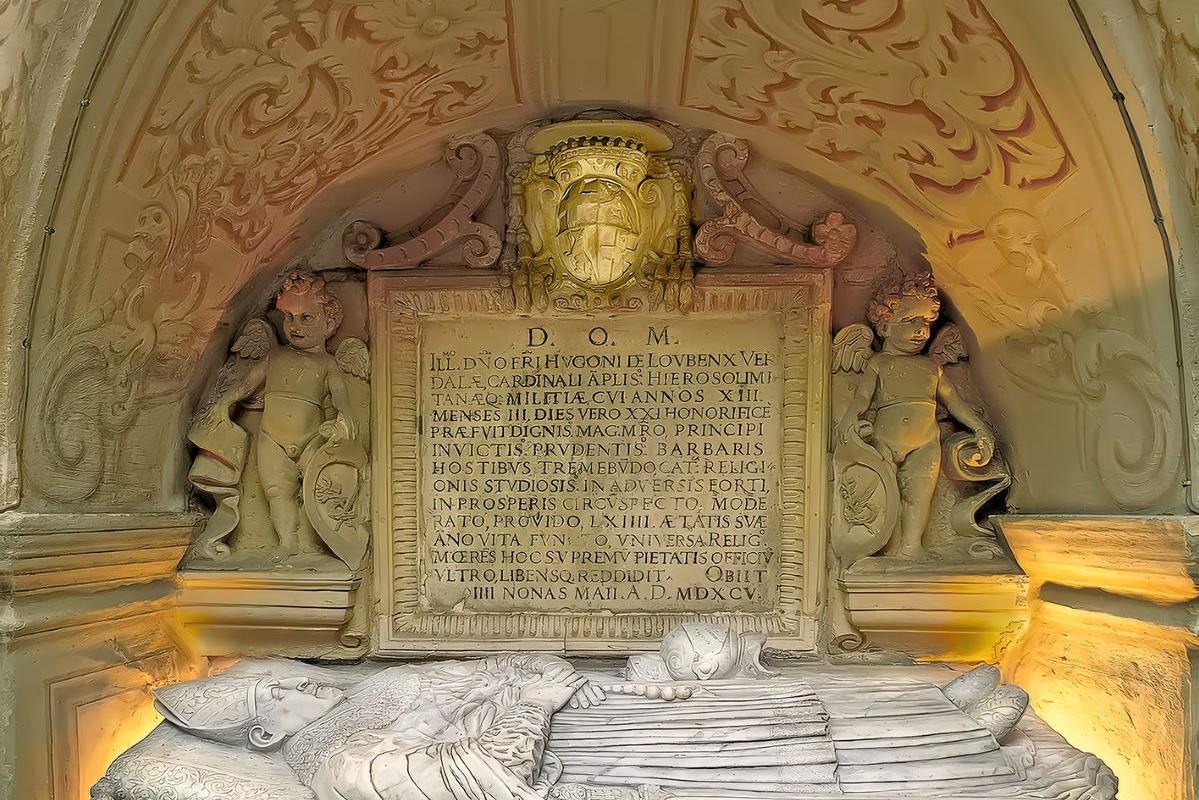
Burial: He is buried in the crypt of St. John's Co-Cathedral in Valletta, inside a sarcophagus he commissioned.
Interesting Anecdotes
-
The Defecating Wolf: Following a feud with the Colonna family in Rome, he allegedly erected a monument in St. George’s Square featuring a wolf (his heraldic symbol) "disgracing" a column (the Colonna symbol).
-
Worldly Nature: Contemporary accounts described him as "pious but worldly," noting he introduced the elegant fashion of playing music during dinner to provide a "foretaste of Paradise".
Historical context: Order of Malta, The Grand Masters; History of the Order.
Further images from the archive